Juice or pureeStandalone modules or a connected routeProduct-specific selection
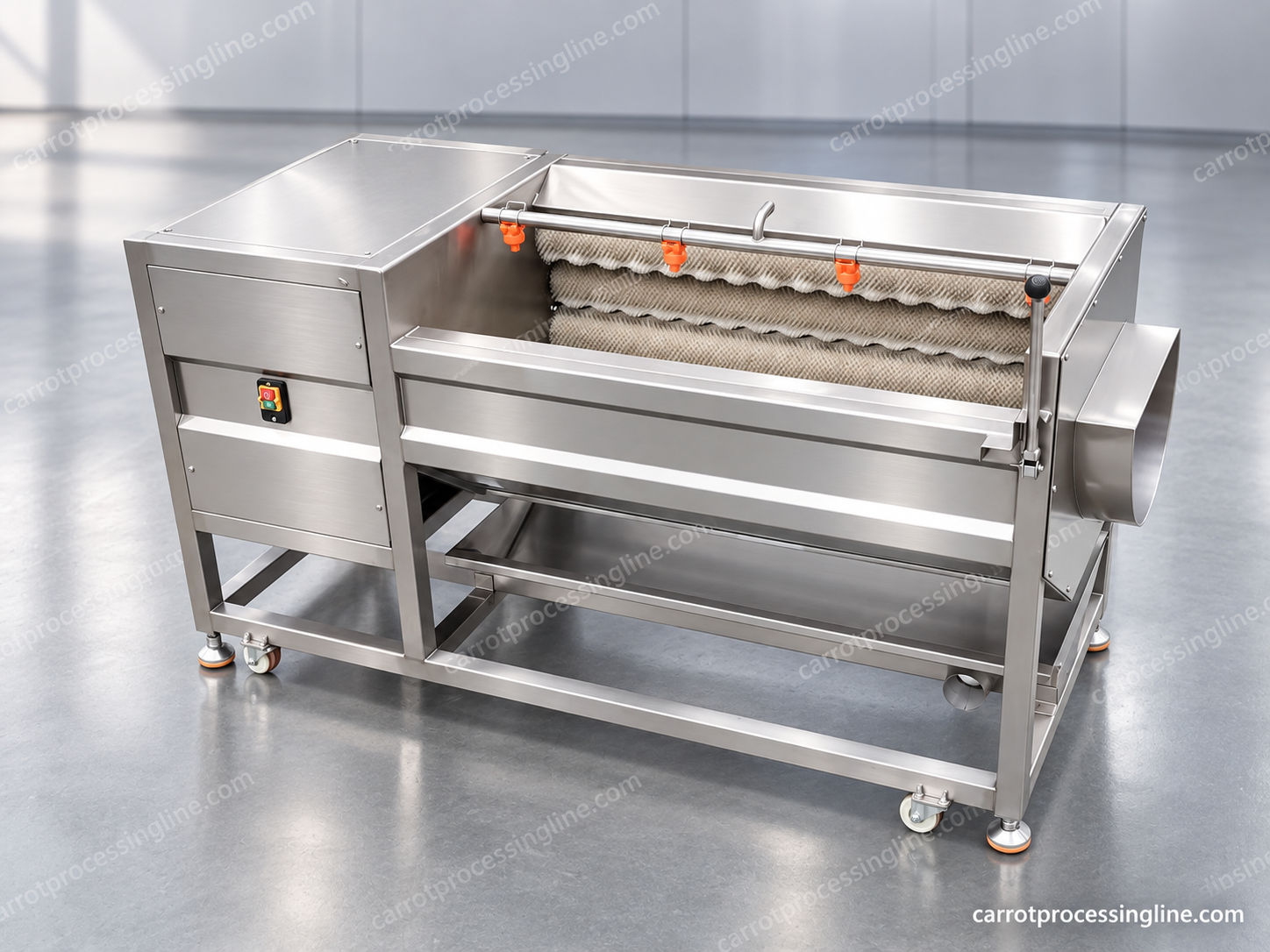
Photo-based presentation of root brush washer with spray bar and brush rollers. AI-refined lighting and background; selected duty requires a product trial. This is not a crop-specific delivery record.
From root preparation to the package interface
Start with your product
One raw material. Different equipment decisions.
Juice separates a liquid stream. Puree retains prepared tissue. Concentration is an additional downstream duty.
01 / JUICE
Extract the liquid. Set the solids profile.
Root preparation → pressing → separation or finishing → selected treatment and filling.
Multi-stage washing is essential for soil-bearing roots. Preheating is included for texture conditioning and an earthy-flavour reduction trial; the final conditions are confirmed with the customer product.
02A / Carrot juice
Extract liquid. Set the solids profile.
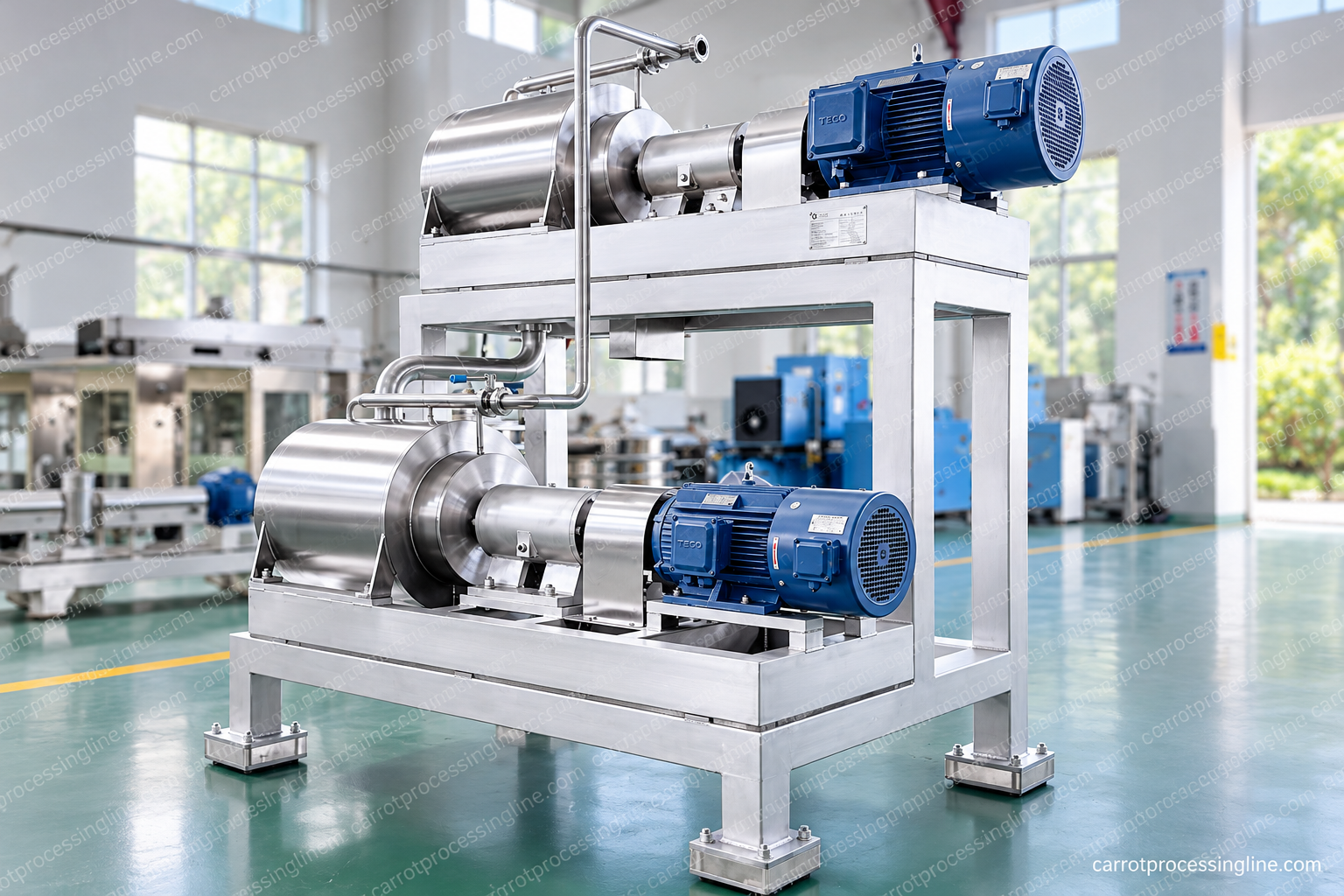
Carrot juice extraction pressPrepared root mash suitable for pressing → Extracted liquid and a fibre-rich press residue
Juice solids separation / finishingExtracted liquid containing suspended solids → Juice with the specified solids profile and a reject stream
Sequence and inclusion follow the product, preservation and package specification. Concentration does not replace extraction or process validation.
Real process-stage excerpts
Follow three equipment interfaces: washing and transfer, preparation feed and heating, then bag-in-drum filling.
These silent excerpts total 100 seconds. They are selected stages, not an uninterrupted full-line run, and do not establish capacity, process validation or shelf life.
1. Washing and transfer
42 seconds · silent actual footage
Watch the washer outlet, the transfer chute and carrots advancing on the conveyor. These interfaces connect root cleaning to the next preparation operation; the clip does not measure cleaning effectiveness.
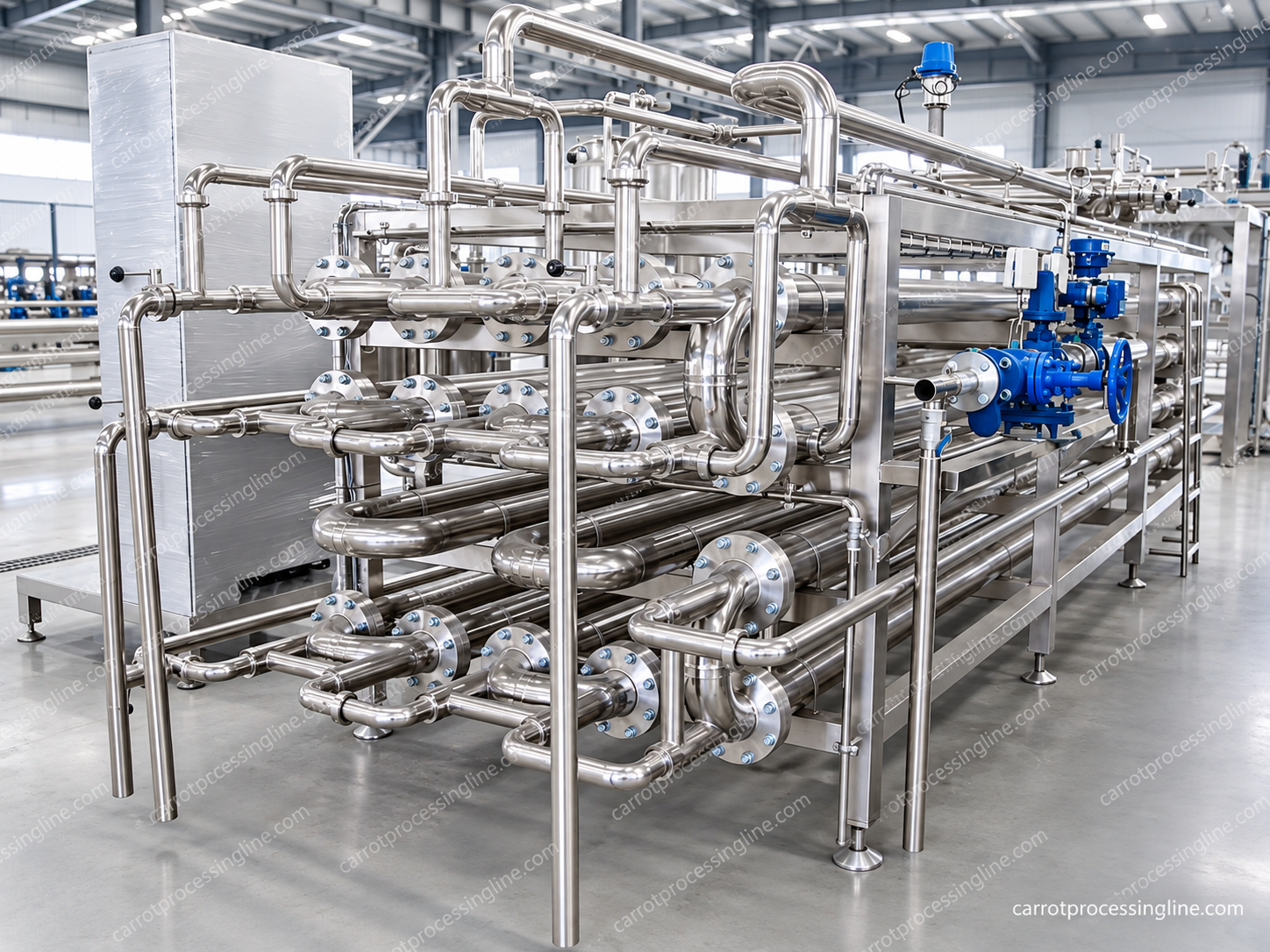
The conveyor brings carrots toward an enclosed preparation unit; the camera then shows connected heating pipework and controls. Internal cutting and product time-temperature conditions are not visible, so they must be confirmed separately.
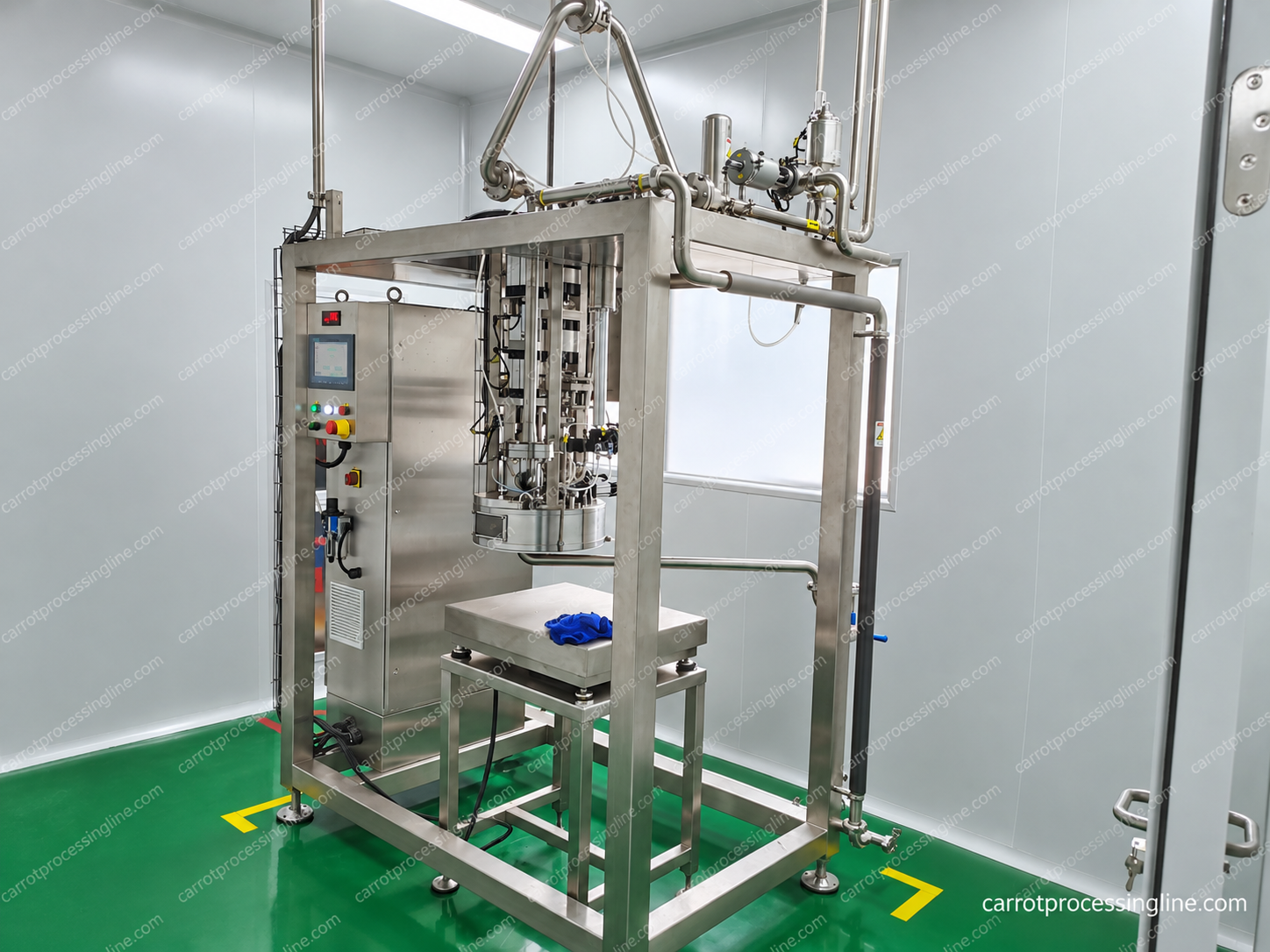
An inner bag sits in a drum beneath the filling assembly, next to its control panel and transfer conveyor. Observe the package and equipment connection; the image alone does not verify a complete filling cycle, aseptic performance or product identity.
The wash train is configured for the actual soil load and root condition. Preheating is included to evaluate reduction of earthy notes and tissue conditioning; temperature, duration and sensory results are confirmed with the customer product.
Soil-bearing roots
Pre-wash
Brush wash
Final rinse
Stone removal and inspection
Cut
Preheat
Juice or puree extraction
Treatment
Filling
Several washes, separate water duties
Use soil removal, controlled brush washing and a final rinse. Separate sludge and dirty return water from the prepared product.
A measurable product basis
Record incoming roots, removed soil and rejects, extracted juice or puree, and remaining side streams separately.
Photo-based equipment presentation with AI-refined lighting and background; not a delivered-project record.
Define the actual equipment duty.
Share your incoming material, required product, operating hours and packaging so that the selection can be checked against real conditions.
 Equipment presentation
 Equipment presentation
 Equipment presentation