Skip to contentEquipment directory
Specify the duty. Connect the line.
Review input, output, structure, parameter basis and cleanability for each equipment item. Quick parameter panels link to the full scope.
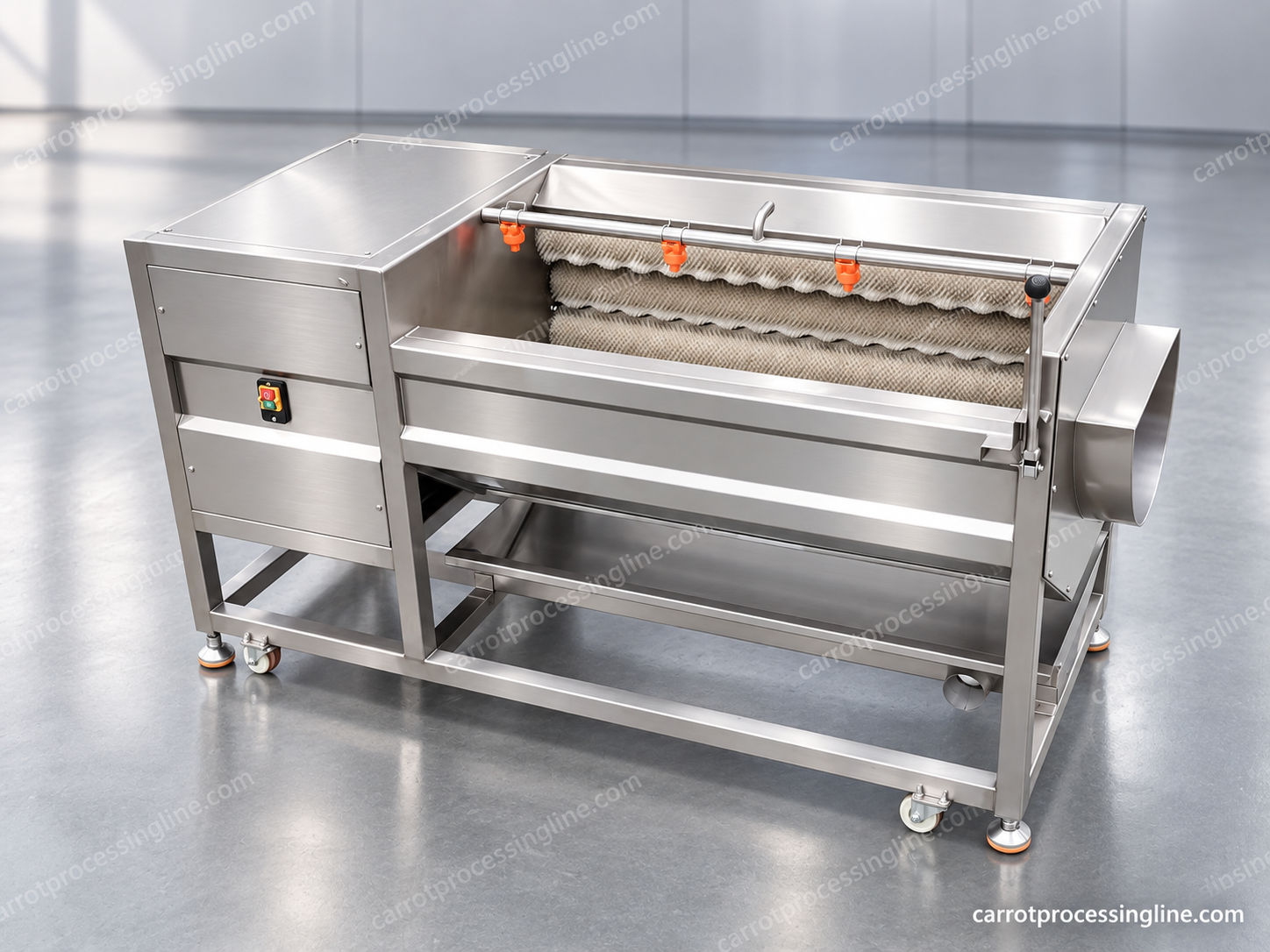 Equipment presentation
Common preparation
Remove heavy soil through pre-washing, brush washing and a clean-water final rinse before inspection and cutting.
- In
- Raw roots with soil and adhering debris
- Out
- Washed roots with accessible surfaces for inspection
Stone separation moduleRoot stream containing possible dense foreign material → Root stream after designed stone separation; separate rejects
Configuration and equipment drawing follow the confirmed process scope. Common preparation
Create a defined foreign-material removal point before cutting and extraction equipment.
- In
- Root stream containing possible dense foreign material
- Out
- Root stream after designed stone separation; separate rejects
Root inspection conveyorWashed, separated roots → Accepted roots and an identifiable reject stream
Configuration and equipment drawing follow the confirmed process scope. Common preparation
Present product at a workable rate so operators or a specified inspection system can reject unsuitable material.
- In
- Washed, separated roots
- Out
- Accepted roots and an identifiable reject stream
Optional root peeling moduleAccepted roots where the product specification requires peel removal → Prepared roots plus a separately measured peel stream
Configuration and equipment drawing follow the confirmed process scope. Conditional preparation
Remove an agreed surface layer when sensory, formulation or process requirements justify the operation.
- In
- Accepted roots where the product specification requires peel removal
- Out
- Prepared roots plus a separately measured peel stream
Carrot cutting and size reductionAccepted whole or prepared roots → Pieces or mash suited to the next operation
Configuration and equipment drawing follow the confirmed process scope. Common preparation
Create a consistent feed geometry for the chosen conditioning and extraction method.
- In
- Accepted whole or prepared roots
- Out
- Pieces or mash suited to the next operation
Optional conditioning / softening unitCut roots or mash under a defined conditioning plan → Conditioned feed at a measured temperature and texture
Configuration and equipment drawing follow the confirmed process scope. Conditional preparation
Adjust tissue condition where trials show a benefit for extraction, texture or the chosen process.
- In
- Cut roots or mash under a defined conditioning plan
- Out
- Conditioned feed at a measured temperature and texture
Carrot juice extraction pressPrepared root mash suitable for pressing → Extracted liquid and a fibre-rich press residue
Configuration and equipment drawing follow the confirmed process scope. Juice branch
Separate a liquid stream from prepared carrot tissue while maintaining a measurable side-stream balance.
- In
- Prepared root mash suitable for pressing
- Out
- Extracted liquid and a fibre-rich press residue
Juice solids separation / finishingExtracted liquid containing suspended solids → Juice with the specified solids profile and a reject stream
Configuration and equipment drawing follow the confirmed process scope. Juice branch
Adjust suspended material to the intended cloudy or more clarified juice specification.
- In
- Extracted liquid containing suspended solids
- Out
- Juice with the specified solids profile and a reject stream
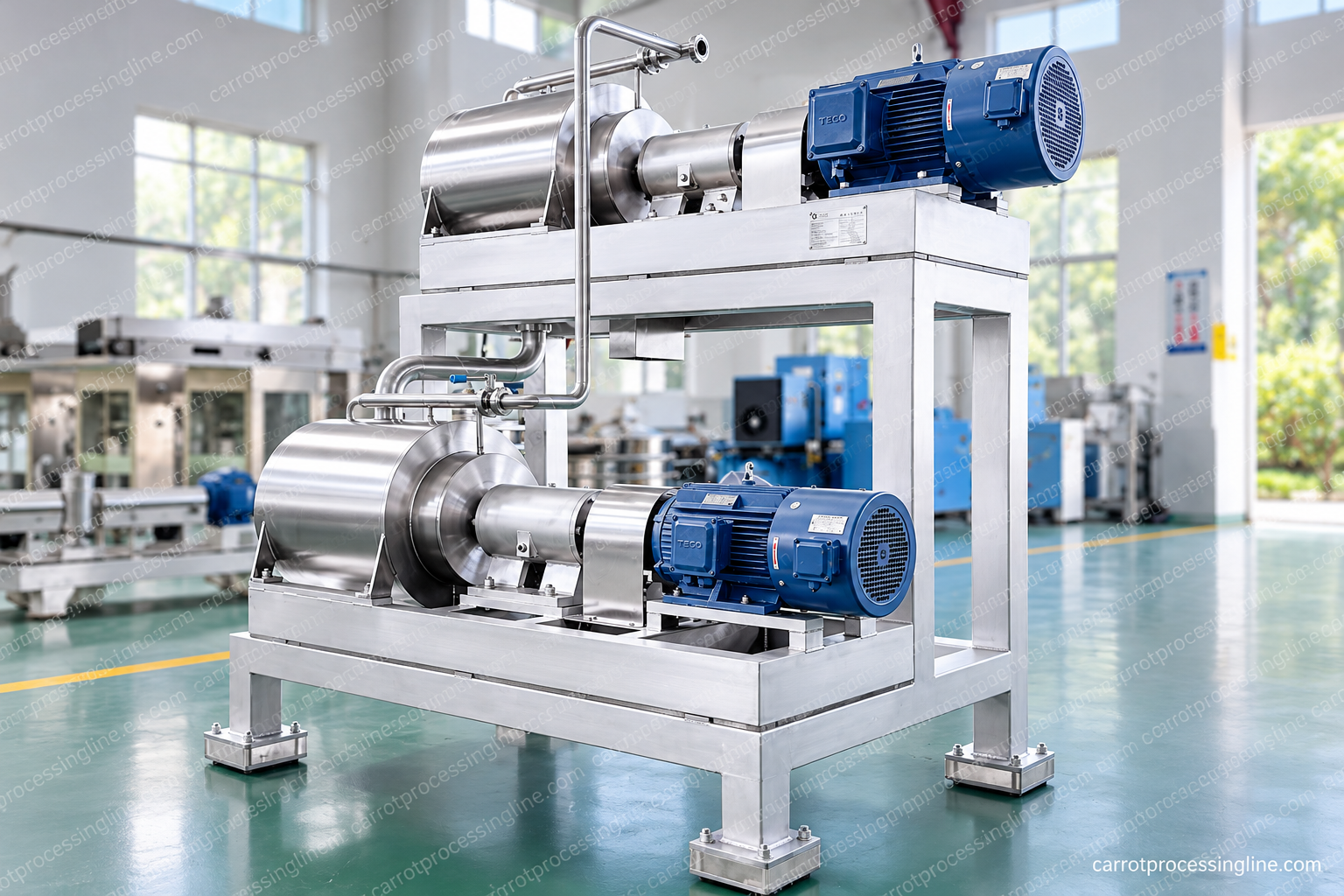 Equipment presentation
Puree branch
Break down prepared roots into a pumpable pulp while separating material unsuitable for the target product.
- In
- Cut or conditioned roots suitable for pulping
- Out
- Pulp containing comminuted tissue plus a coarse reject stream
Equipment presentation Puree branch
Bring puree texture toward the agreed sample or measurable specification.
- In
- Carrot pulp with a defined fibre and particle distribution
- Out
- Refined puree and a controlled coarse fraction
Product buffer and transfer systemJuice or puree at a measured process condition → Controlled feed to concentration, treatment or an existing process
Configuration and equipment drawing follow the confirmed process scope. Downstream interface
Keep the correct product branch moving without losing its capacity and hygiene boundaries.
- In
- Juice or puree at a measured process condition
- Out
- Controlled feed to concentration, treatment or an existing process
Optional concentration moduleJuice or puree with known solids and flow behaviour → Concentrated product and separated water vapour/condensate
Configuration and equipment drawing follow the confirmed process scope. Downstream option
Increase the agreed solids level after the base juice or puree route has been established.
- In
- Juice or puree with known solids and flow behaviour
- Out
- Concentrated product and separated water vapour/condensate
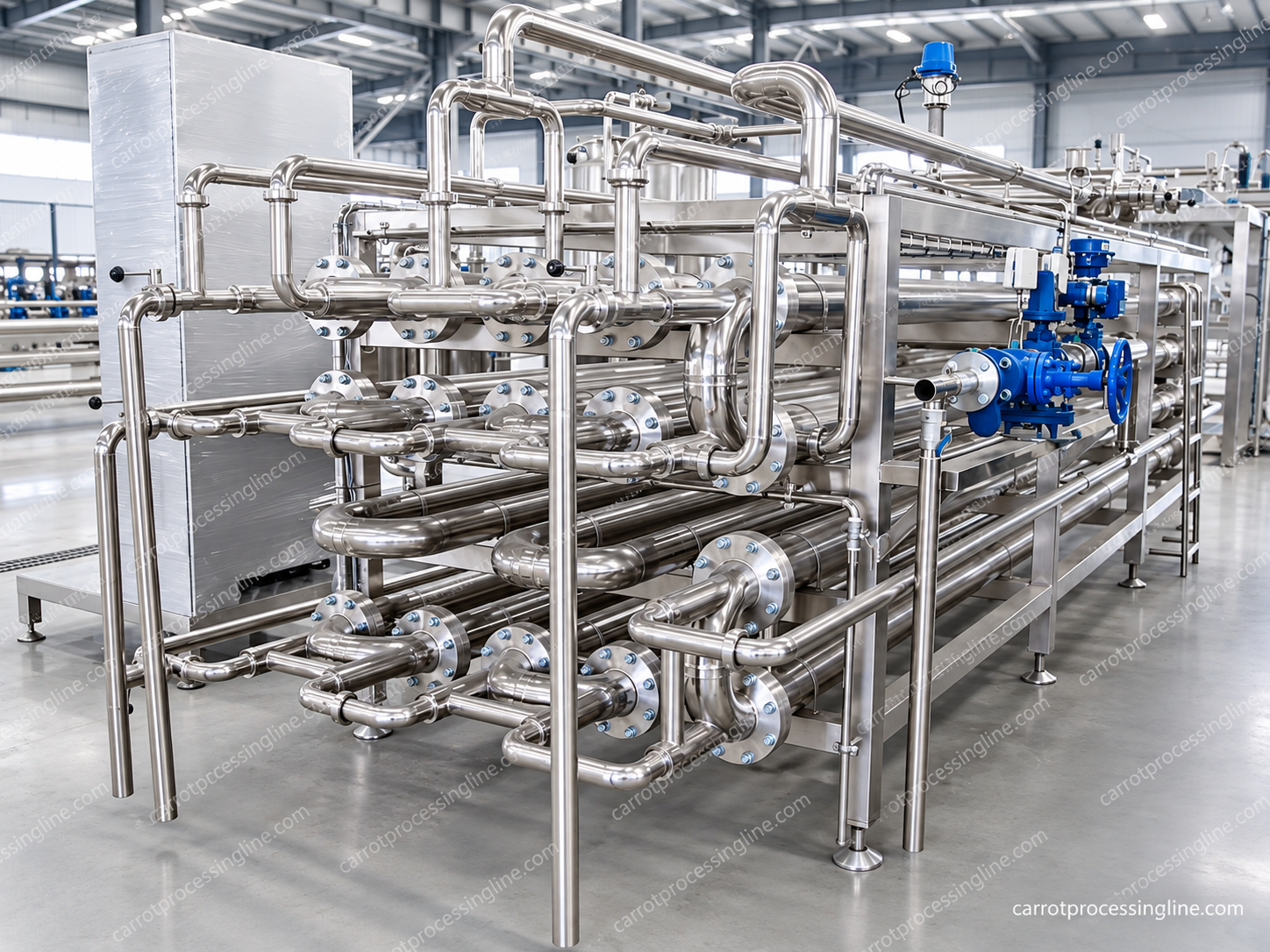 Equipment presentation
Validated finishing scope
Provide the heating, holding and cooling interfaces required by the qualified process design.
- In
- Defined juice or puree formulation at specified feed conditions
- Out
- Product meeting the validated process condition for the package route
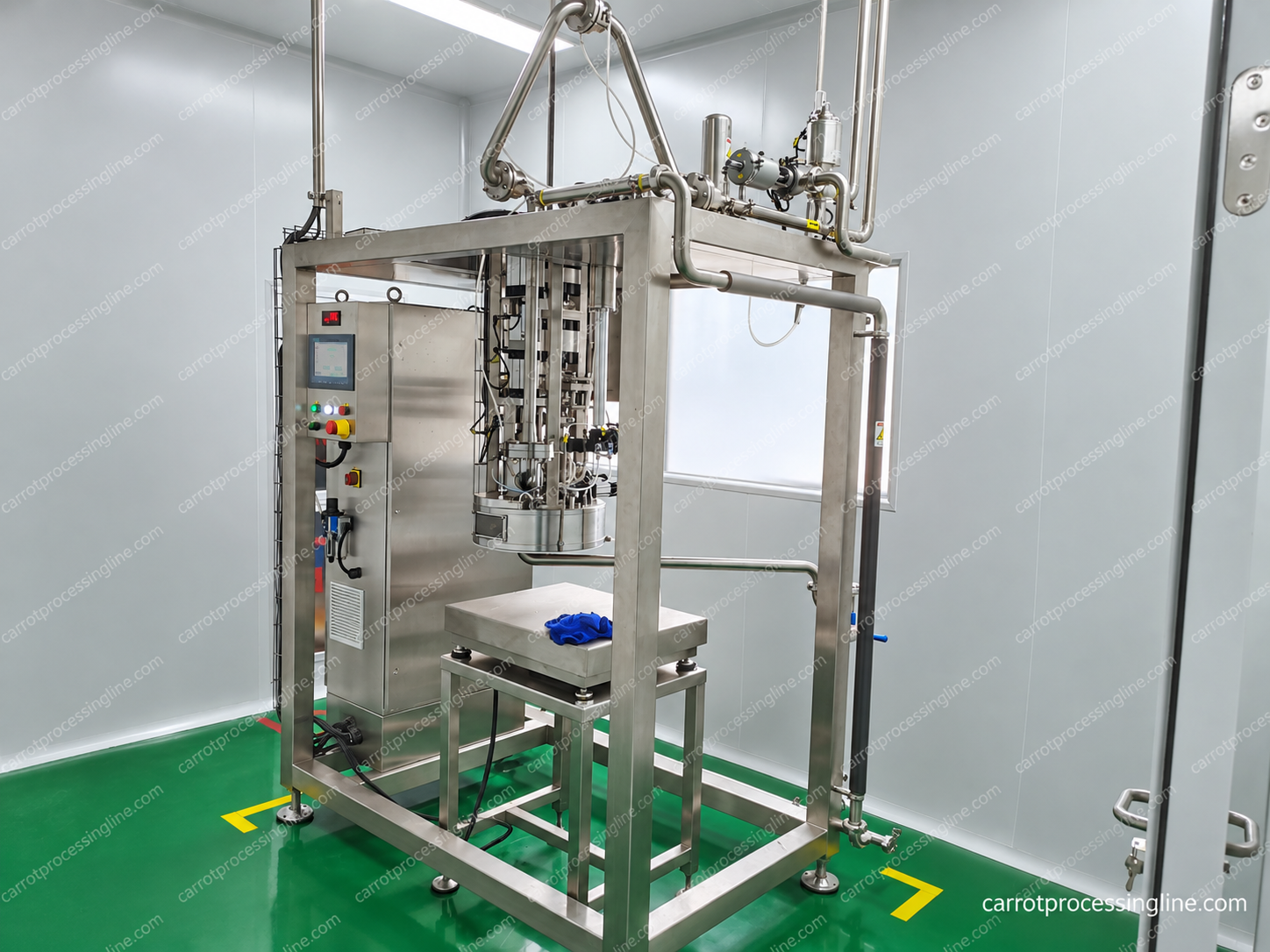 Equipment presentation
Validated finishing scope
Bring product delivery, container handling and closure into one specified interface.
- In
- Prepared product and a compatible package under a defined process
- Out
- Filled, closed units transferred to the agreed distribution route
Cleaning and drain-down systemThe defined dirty equipment circuits after product recovery → Cleaned equipment assessed under the agreed verification programme
Configuration and equipment drawing follow the confirmed process scope. Whole-line interface
Make every preparation, extraction and finishing circuit accessible to its appropriate cleaning method.
- In
- The defined dirty equipment circuits after product recovery
- Out
- Cleaned equipment assessed under the agreed verification programme
Project enquiry
Make the next equipment decision
Start with the product, raw material and production basis.