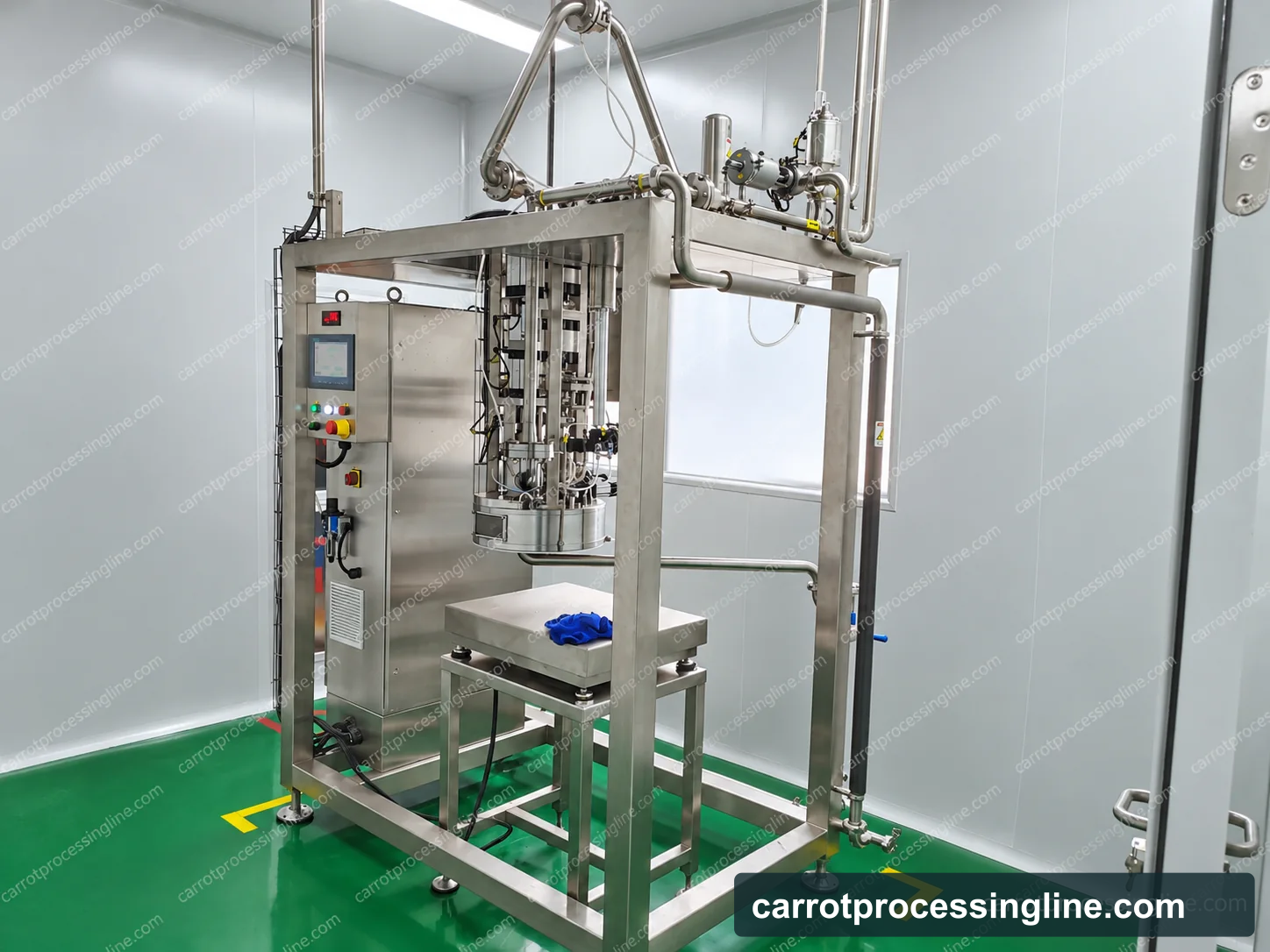
Reduce and even out dispersed particles where cloud stability, sediment behaviour or puree smoothness require a mechanical finishing step.
Incoming material
Extracted juice or refined puree at a defined particle, solids and temperature condition
Outgoing material
Product with a more uniform particle-size distribution, subject to agreed trial acceptance
Working arrangement
A high-pressure or other proposed homogenizing arrangement forces product through a defined valve or orifice. Pressure, number of stages, valve materials and flow path are selected from representative product trials. A fibrous puree and a low-viscosity juice present different valve, pressure and fouling risks.
Optional homogenization module
Extracted juice or refined puree at a defined particle, solids and temperature condition → Product with a more uniform particle-size distribution, subject to agreed trial acceptance
Configuration and equipment drawing follow the confirmed process scope.
Specification
Define these parameters
Feed particle distribution, solids and temperature
Target cloud, sediment or puree texture criterion
Proposed pressure, stages and flow range
Valve wear, cleaning access and utility demand
Trial the intended feed at the proposed pressure and stages, then compare particle or texture measurements, sediment, colour and cleaning behaviour with the unhomogenized reference.
Integration
Connect the interfaces
Place the module after the selected separator or refiner and before the agreed thermal and filling boundary. Confirm buffer volume, inlet pressure, temperature and the response to a downstream stop.
Cleaning and access
Provide safe access to the valve, seats, impact surfaces and product passages. Fibrous deposits and dead legs need a defined cleaning and inspection routine; a flush step alone is not a validated cleaning programme.
Homogenization is not a preservation step and does not replace separation or refining. It can change colour, viscosity and sediment behaviour, so the effect must be measured on the actual product rather than assumed from another juice.
Clear product and equipment requirements make the next conversation useful.
What does the optional homogenization module do?
Reduce and even out dispersed particles where cloud stability, sediment behaviour or puree smoothness require a mechanical finishing step.
How should this equipment be selected?
Trial the intended feed at the proposed pressure and stages, then compare particle or texture measurements, sediment, colour and cleaning behaviour with the unhomogenized reference.
What information should I include in the enquiry?
Feed particle distribution, solids and temperature; Target cloud, sediment or puree texture criterion; Proposed pressure, stages and flow range; Valve wear, cleaning access and utility demand. Include the upstream and downstream product interfaces.
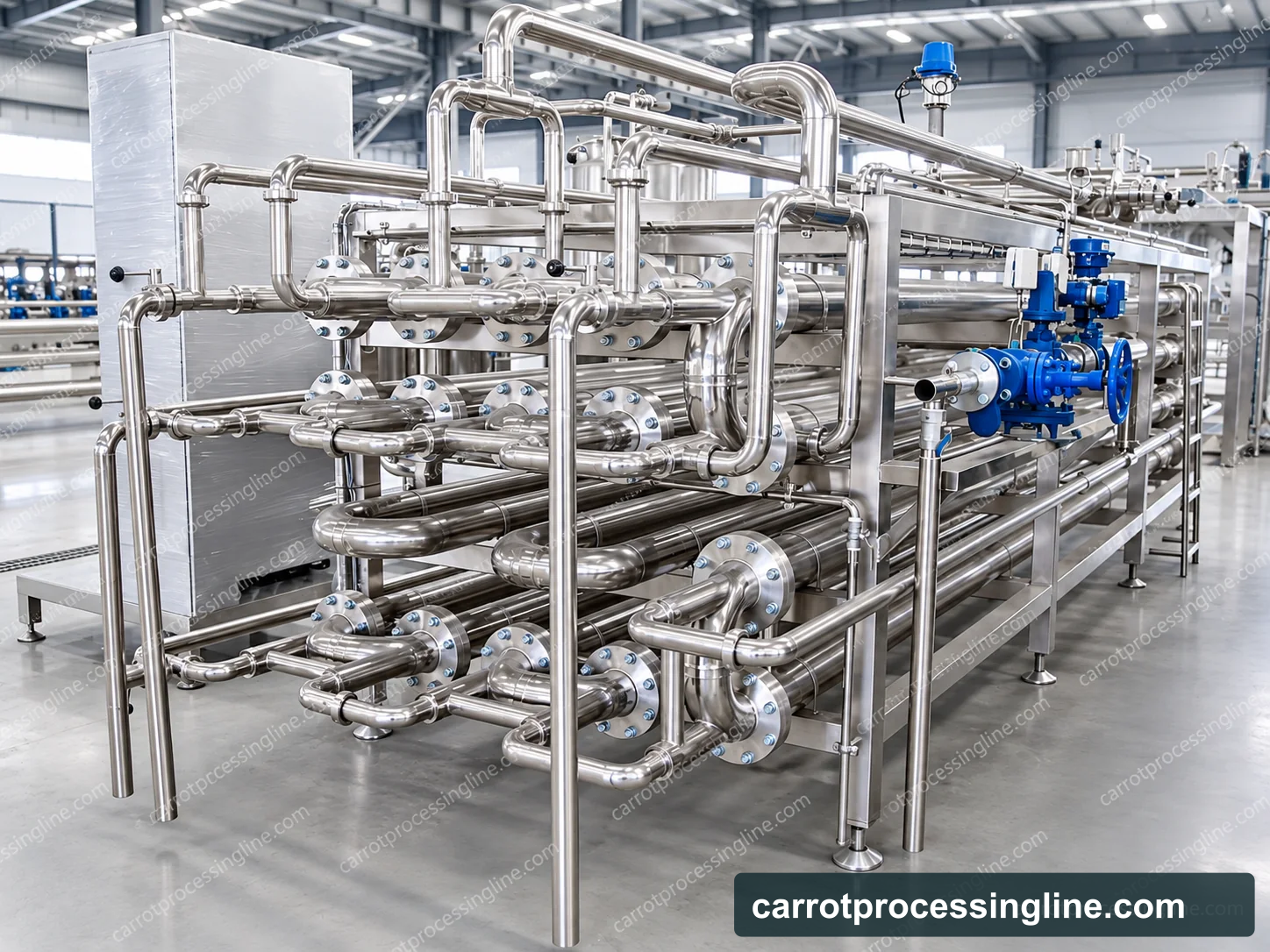 Equipment presentation