How a carrot processing line works as one controlled system
Learn how material flow, heat, separation, controls and sanitation interact across an industrial carrot juice or puree processing line.

Hygienic design
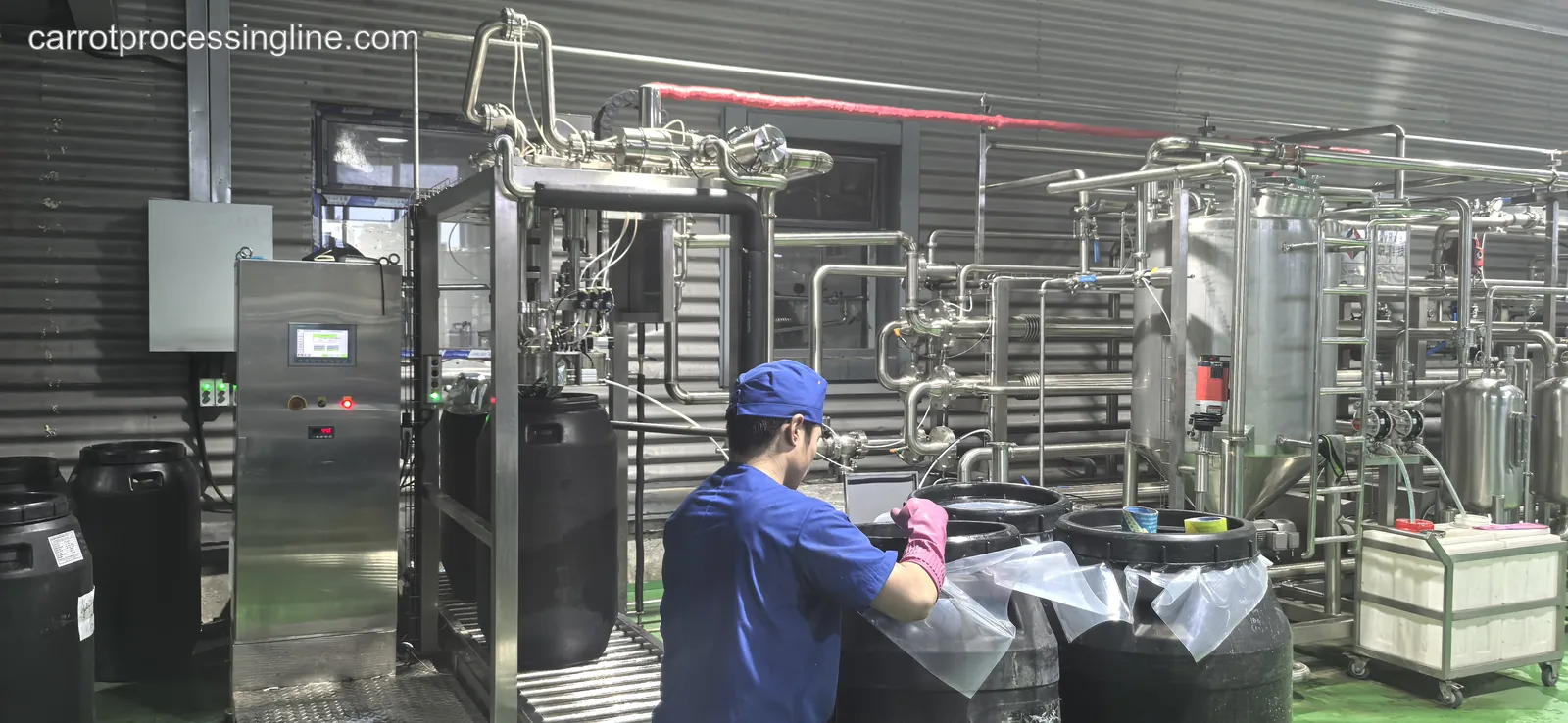
Hygiene is a system property. Product contact surfaces, pipe routes, valves, instruments, access, zoning and cleaning recipes must work together.
Core principles
CIP engineering
A CIP skid is not proof that every branch cleans correctly. Calculate the required circuit velocity or device flow, check simultaneous users, define concentration and temperature measurement, and show how the return condition is monitored. Product recovery and pre-rinse routing also influence water use and wastewater load.
High-viscosity puree, fibers and particles can make some circuits harder to clean. Trials and post-clean inspection should focus on the most difficult product and geometry, not just the easiest water test.
| CIP question | Why it matters |
|---|---|
| Which equipment shares a circuit? | Defines hydraulic demand, sequence and cross-connection risk. |
| How is chemical concentration measured? | Supports repeatability rather than relying only on preparation volume. |
| Where is the return monitored? | Shows whether the remote part of the circuit reached its target conditions. |
| What requires manual cleaning? | Makes labor, access, safety and verification explicit. |
Verification
Factory testing can confirm sequence and basic coverage, while site validation uses the actual water, chemicals, product and operating team. Define inspection points and records before acceptance so hygiene is tested as a requirement, not discussed after start-up.
Continue planning
Learn how material flow, heat, separation, controls and sanitation interact across an industrial carrot juice or puree processing line.
Plan carrot processing line installation, factory testing, site acceptance, training, spares and preventive maintenance with clear evidence gates.
Use primary food-process and hygienic-design references to support carrot juice and puree engineering decisions and project specifications.
Share the feedstock, target product, throughput basis, package and site utilities. The response can then focus on a defensible process boundary instead of a generic machine list.