Move
Conveyors and pumps transfer material without creating avoidable damage, air entrainment or hold-up.

Working principle
The line converts variable roots into a controlled food product by managing material condition, separation, temperature, residence time and hygienic boundaries.
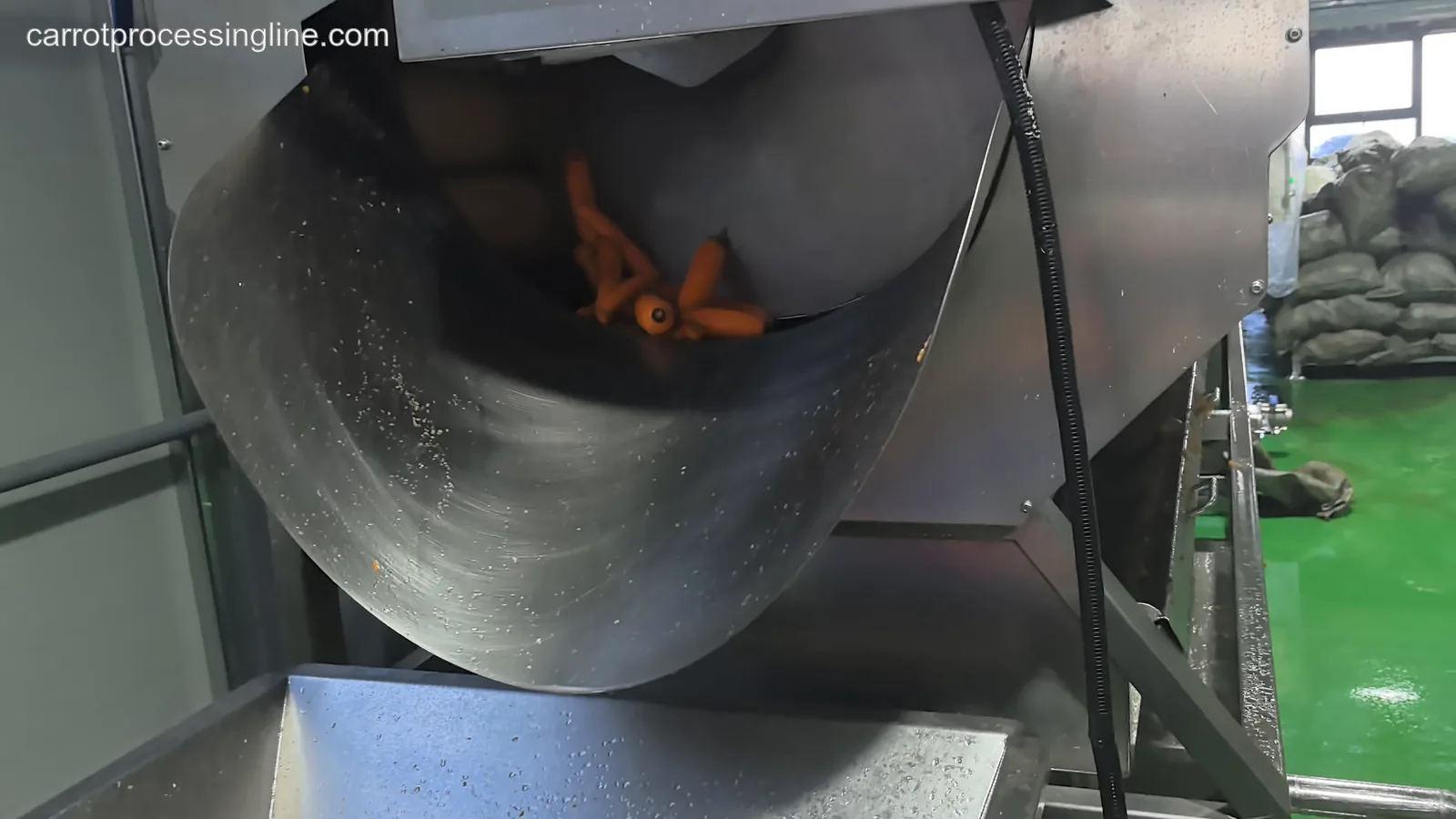
System view
Conveyors and pumps transfer material without creating avoidable damage, air entrainment or hold-up.
Cutting, heating, pulping, pressing or refining changes the carrot into the required product structure.
Inspection, screens and extraction equipment remove foreign material or divide product and side streams.
Sensors, recipes, interlocks and records keep the intended sequence and make deviations visible.
Line balance
Every stage has a working range. Surge vessels can decouple short disturbances, but they cannot permanently compensate for an undersized finisher, heat exchanger or filler. A credible capacity calculation follows mass flow through the complete route and includes start-up, product change and cleaning time.
Controls should protect the process boundary: permissives confirm that downstream equipment is ready, level logic prevents dry running or overflow, and critical thermal parameters are recorded according to the validated food-safety plan.
Hygiene
A clean-in-place circuit has its own flow, temperature, concentration and return requirements. Pipe routing, valve selection, spray coverage and drainability must support both production and cleaning. If a component cannot be cleaned in place, the manual method and inspection access should be explicit.
Continue planning
Follow a stage-by-stage carrot process flow with a clear split between juice extraction and puree pulping, plus thermal and filling boundaries.
Review hygienic zoning, drainability, cleanability, CIP circuits, material selection and verification for carrot juice and puree processing.
Integrate carrot processing equipment with utilities, controls, tanks, CIP, packaging, wastewater and building interfaces using a clear scope matrix.
Share the feedstock, target product, throughput basis, package and site utilities. The response can then focus on a defensible process boundary instead of a generic machine list.